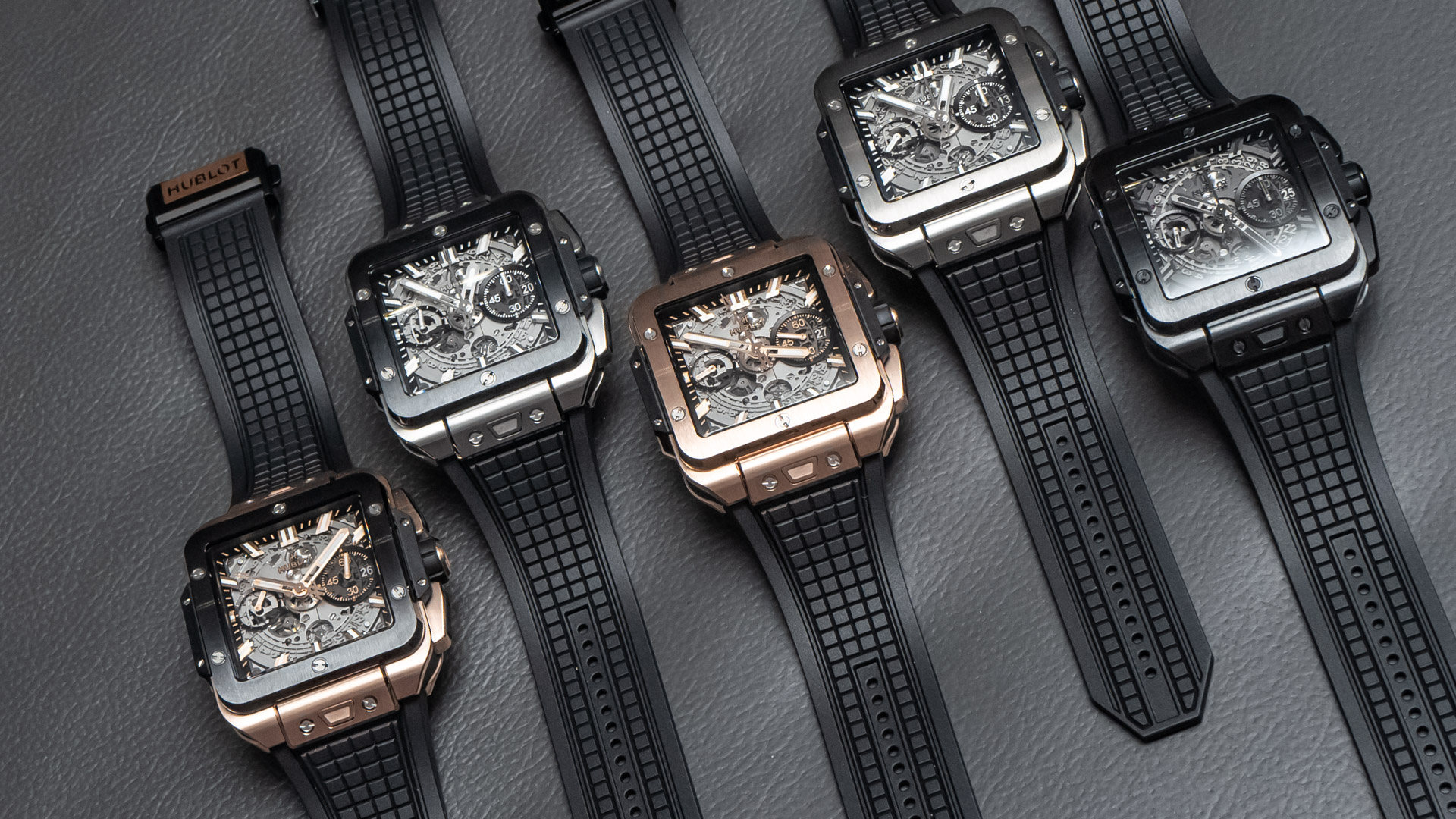

The Square Bang Unico succeeds or fails long before the viewer reaches the movement. Its square outline needs to sit convincingly around a circular time display, with the bezel, broad corners and strap junction sharing the visual load. A square sports chronograph can easily feel too thick or too decorative. Hublot’s approach is interesting because the Big Bang vocabulary is retained even while the surrounding geometry changes.
Several descriptions of this watch rely on an alleged hands-on encounter. This article makes no such claim. It examines available design images and the distinctions a reader should look for when comparing a Hublot Square Bang Unico replica case with the original design language.
A case that makes four corners part of the mechanism
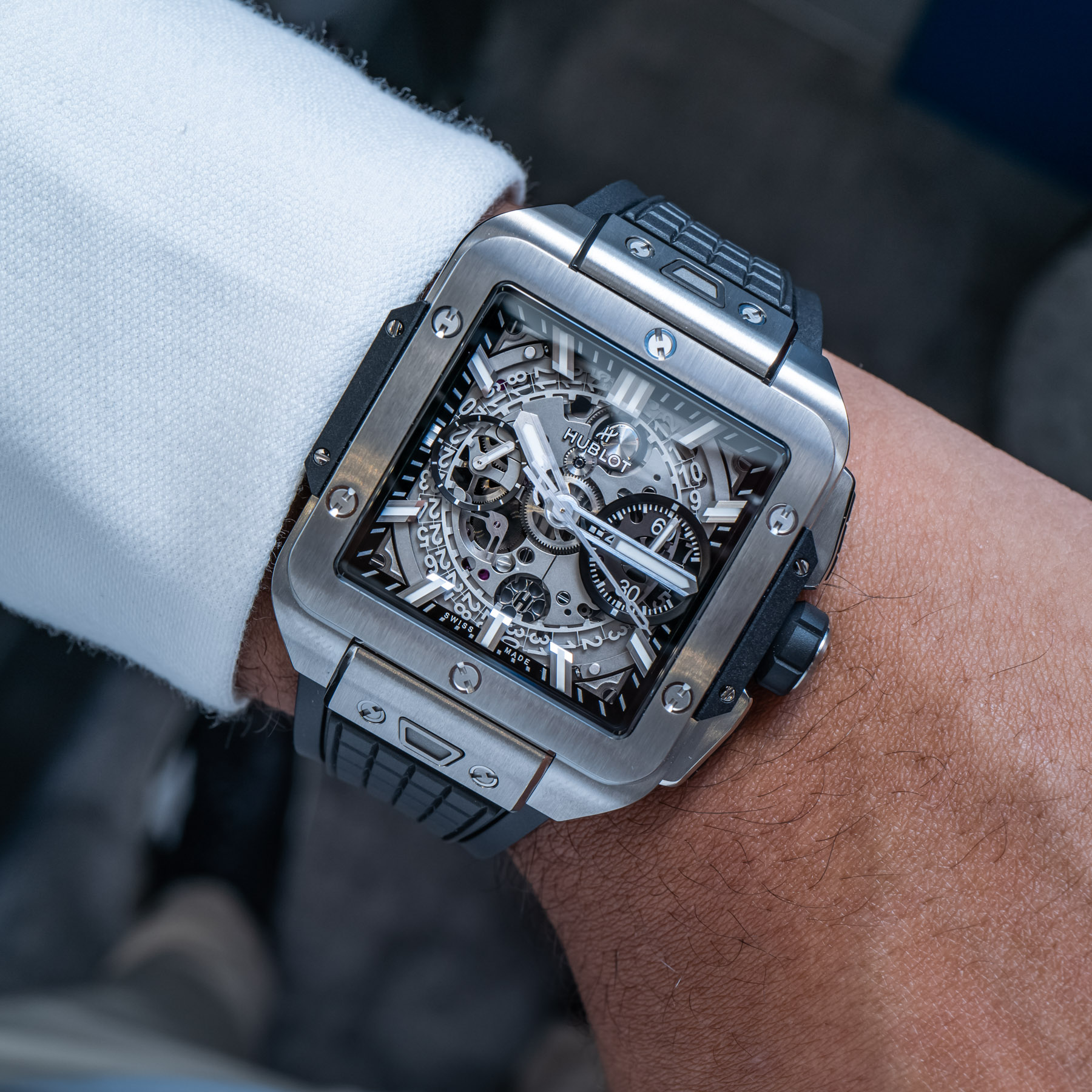
On a conventional round sports watch, the bezel follows the dial. Here the bezel corners extend beyond the circular display, creating four visible zones where case construction becomes prominent. The screws and connecting surfaces should look intentionally placed; otherwise the watch can appear like a round chronograph buried in a square shell. That is a geometric problem, not one solved by brighter colours or more decorative finishes.
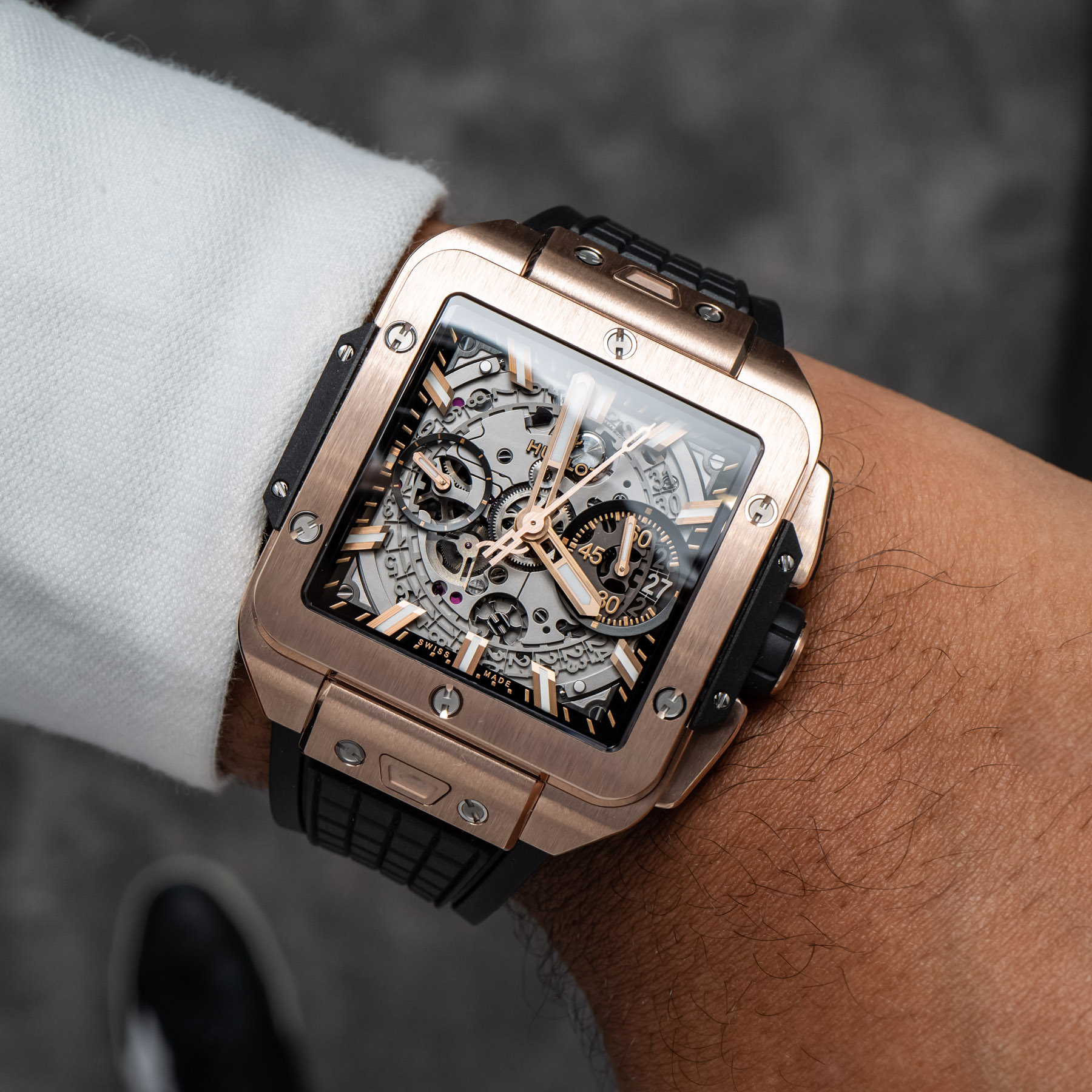
Notice the space around the crown and pushers. The squarer case changes how the components relate to the side wall. If a reproduction makes the corners too soft or the pushers too closely packed, the entire profile shifts. Square Bang bezel and pusher proportions are therefore valuable comparison points even before movement architecture is discussed.
The dial is busy, but it still has to be read
Hublot’s visible-mechanism style tends to place gears, bridges and registers in direct view. That may be dramatic in a product photograph, but a watch is still a time-reading instrument. Inspect the contrast between hands and movement background. Does the minute track remain identifiable? Are the chronograph sub-dials easy to separate? A visually convincing case can still carry a confusing or badly spaced dial.
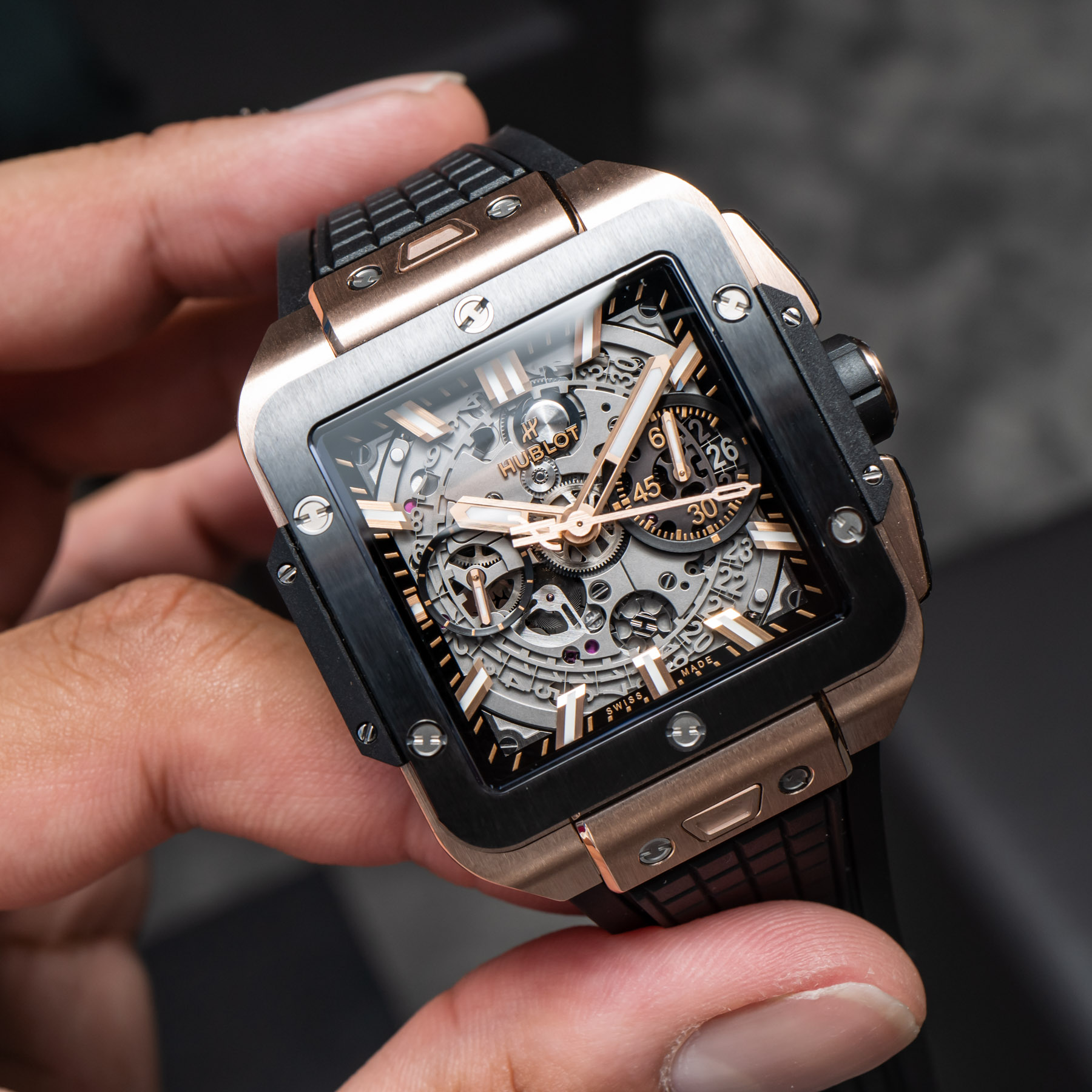
A further challenge is the strap. The case has substantial corners, yet the strap must connect without looking like an unrelated accessory. The fourth photograph draws attention to the angle of that connection and the finish of the case flanks. This is where a style that looks convincing from directly above can become unbalanced from a three-quarter view.

Read alongside the Hublot archive, the Square Bang shows why the same brand can require different assessment criteria for its various case shapes. More about the site’s approach to replica watch design and history appears on the homepage. For this particular watch, it is the disciplined handling of the corners—not a sweeping claim of perfect similarity—that makes an analysis useful.