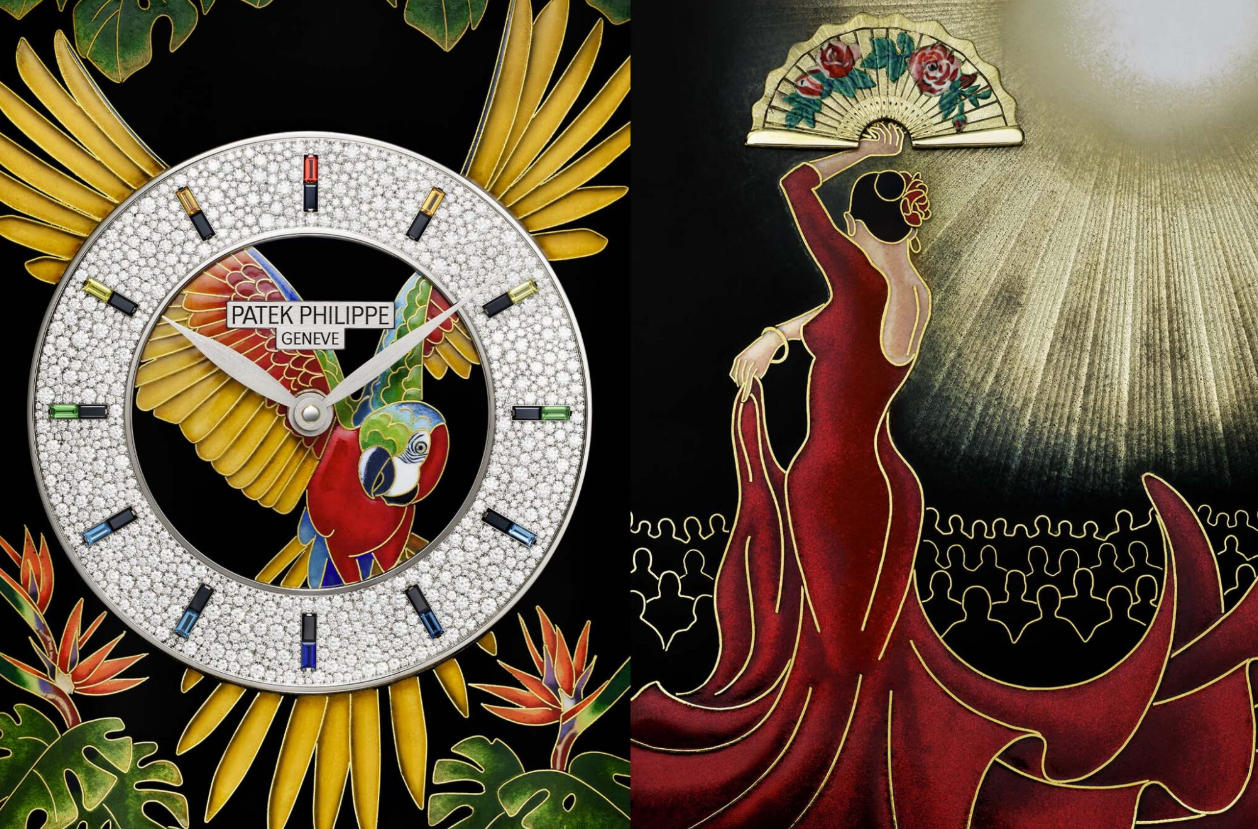

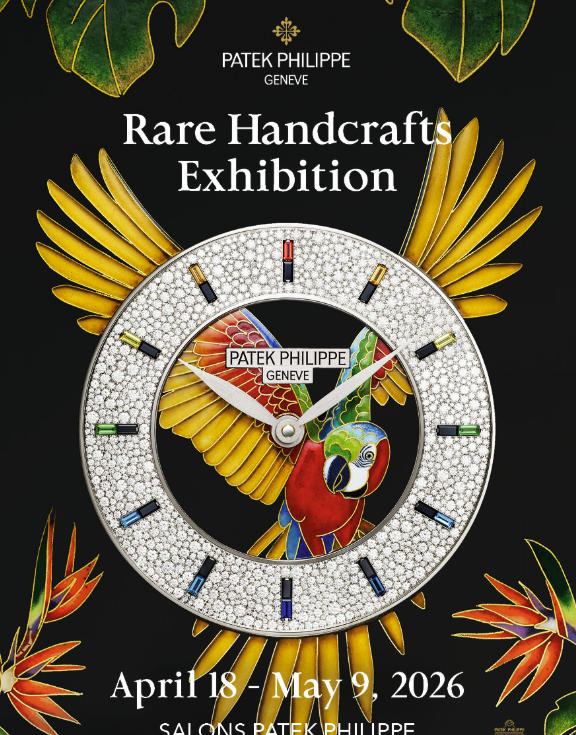
Some Patek Philippe releases are easy to understand from a photograph. A Nautilus has its familiar case and bracelet, while a Calatrava can often be recognised from a few clean lines on the dial. The watches and clocks shown at the Rare Handcrafts exhibition are different. Much of their appeal only becomes clear when you start looking at how they were made.The 2026 exhibition returned to Patek Philippe’s historic Geneva Salon from 18 April to 9 May, bringing together wristwatches, pocket watches and dome table clocks decorated with techniques that are increasingly unusual in modern watchmaking. For UK readers who mostly encounter Patek Philippe through familiar production models, the exhibition offers a very different side of the brand.Rather than concentrating on new movements or changes to case dimensions, Rare Handcrafts is about enamel, engraving, guilloché and gem setting. That gives the collection a character of its own and explains why these pieces are better viewed as individual works of decorative watchmaking than as conventional new releases.
Why Rare Handcrafts Feels Different From a Normal Watch Launch
A normal watch launch usually begins with specifications: diameter, movement, power reserve and price. With these pieces, those details are almost secondary.What matters first is the surface of the object. A dial may have been painted in several stages, a case may carry hand engraving that took days to complete, while a section that appears to be a simple block of colour can actually be built from repeated enamel firings.That slower way of looking at a watch is what makes the exhibition interesting. It reminds us that high-end watchmaking is not always about making a mechanism more complicated. Sometimes the difficulty lies in producing an image or texture by hand and ensuring that every stage survives the next firing, engraving or polishing process.For readers browsing replica watches and watch news, this is also useful background. Even when someone is mainly interested in familiar production watches, understanding the original decorative work makes it easier to see which details actually define a Patek Philippe piece.
The Macaws Dome Clock Is Hard to Ignore
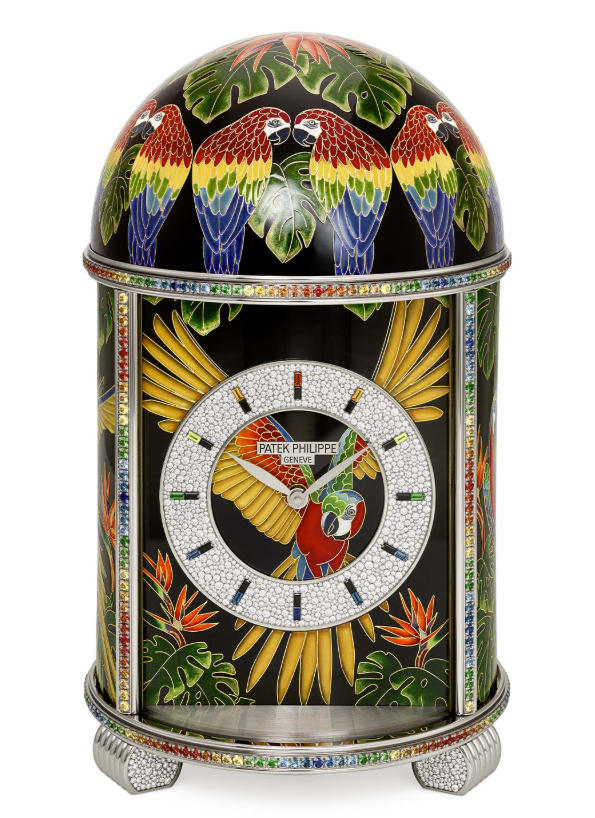
The Macaws dome table clock is one of the pieces that immediately separates this exhibition from an ordinary watch release. The scene depicts brightly coloured macaws among tropical plants, but the important part is not simply the image itself. It is the way that image has been constructed.Patek Philippe used Grand Feu cloisonné enamel, with thin gold wires creating the boundaries between areas of colour. According to the manufacture, around 20.75 metres of gold wire were used for the decoration. Multiple enamel colours were then fired repeatedly at very high temperatures before the finished scene emerged.The result has far more depth than a printed decorative surface. Light catches the enamel differently depending on the viewing angle, while the metal outlines help give the birds and plants definition without making the composition look flat.The clock is also significant because it is described by Patek Philippe as its first gem-set table clock. Diamonds and coloured stones are worked into the surrounding structure rather than treated as a separate decorative addition.For anyone interested in how Patek Philippe decorative watches are finished by hand, this is probably the clearest piece in the exhibition to study. It brings several disciplines together without allowing one technique to overpower the others.
The Flamenco Pocket Watch Has a More Intimate Character
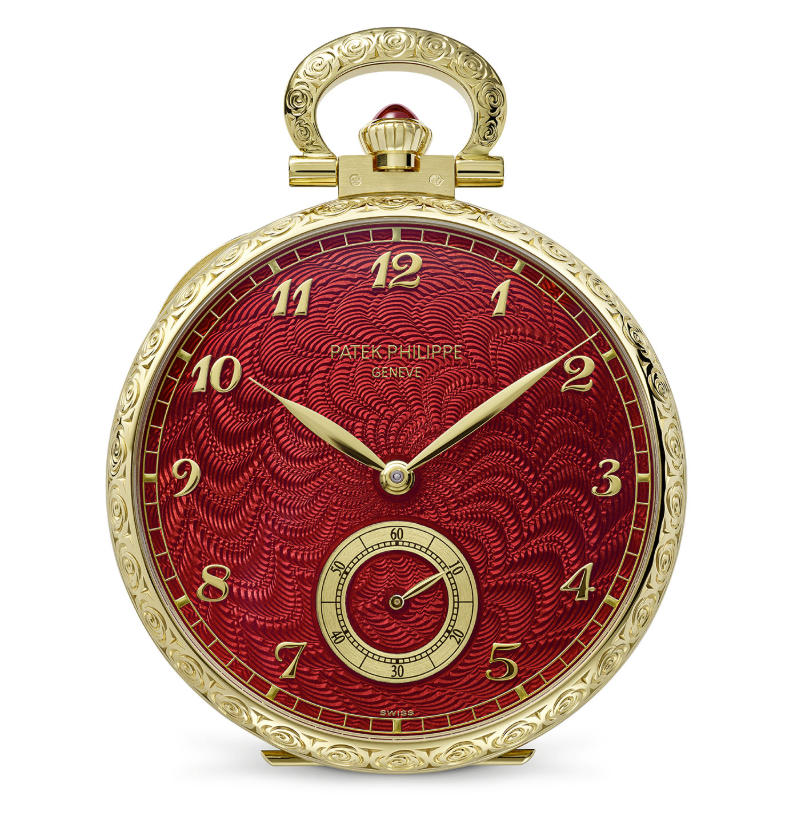
The Flamenco pocket watch takes a completely different approach. Instead of a tropical landscape, it depicts a dancer caught beneath a stage light. The composition feels smaller and more focused, which suits the proportions of a pocket watch.The yellow-gold case combines cloisonné enamel, miniature painting, hand engraving and guilloché work. The dancer is created using fine gold wire and enamel, while the reverse uses a radiating engraved pattern beneath translucent colour.What I find more interesting here is the restraint. It would have been easy for a piece using so many decorative techniques to become visually crowded. Instead, the red dress immediately gives the eye somewhere to settle, while the surrounding engraving supports the scene rather than competing with it.The watch is supplied with a gold display stand, but it can also be worn with a chain. That detail gives it an unusual position between functional watch and decorative object.Readers following Patek Philippe replica watches will usually encounter models based on the brand’s better-known wristwatch collections. Rare Handcrafts shows a completely different part of Patek Philippe’s identity, where the challenge is not simply reproducing a case shape or dial layout but preserving techniques that depend heavily on individual craftsmanship.
Why Enamel Matters More Than the Technical Terms Suggest
Watch articles often list terms such as cloisonné, flinqué and Grand Feu enamel without explaining why they matter. In practice, the important point is that enamel is unforgiving.The colour is produced through layers of material that must survive repeated firings. Too much heat, poor preparation or a small defect can compromise hours of work. That is why an enamel dial cannot really be understood in the same way as a conventionally printed dial.The same applies to hand engraving. The finished pattern may appear perfectly controlled, but it is still the result of a person cutting metal directly with a tool. Slight variations are part of the character of the work rather than something that needs to be hidden.This is one reason traditional Patek Philippe enamel and hand engraved watches continue to attract serious attention even when they sit outside the brand’s most commercially recognisable collections.

There Is More Here Than the Two Headline Pieces
The Macaws clock and Flamenco pocket watch are the easiest pieces to discuss because they demonstrate the exhibition’s purpose so clearly, but the 2026 Rare Handcrafts collection extends much further.Patek Philippe’s current catalogue includes decorated wristwatches such as Golden Ellipse references featuring birds, castles, tartan patterns and landscapes, along with pocket watches and table clocks inspired by nature, architecture and cultural motifs.That variety matters. Rare Handcrafts is not really one collection in the conventional sense. There is no single visual language connecting everything. The common thread is the method of production and the decision to use the watch or clock as a surface for traditional decorative work.
What UK Watch Enthusiasts Can Take From the Exhibition
For most UK collectors, these pieces will never be everyday buying options. Many are unique or produced in extremely small numbers and are destined for private collections.That does not make the exhibition irrelevant. In fact, it can make it more useful.Looking closely at these watches shows how much difference small finishing choices can make. The sharpness of an engraved edge, the depth of translucent enamel or the relationship between the artwork and the shape of the case all influence how convincing the finished object feels.Those observations also translate surprisingly well to more accessible parts of the watch market. When comparing watches inspired by established Swiss models, it is often the less obvious details that separate a convincing piece from one that only looks right at first glance.For that reason, the small finishing details collectors notice on Patek Philippe watches are worth learning about even if Rare Handcrafts itself sits at the very top end of traditional watchmaking.
A Different Side of Patek Philippe
Patek Philippe is often discussed through auction prices, waiting lists and famous steel sports watches. Rare Handcrafts moves the conversation somewhere else.The 2026 Geneva exhibition puts attention back on people working with enamel, engraving tools, guilloché machines and precious materials. The Macaws dome clock is exuberant, while the Flamenco pocket watch is more theatrical and intimate, yet both make the same point: these objects depend on skills that cannot simply be reduced to a specification sheet.That is what makes this exhibition worth covering. It is not simply another group of expensive Patek Philippe releases. It is a reminder that some of the brand’s most interesting work still begins with a craftsperson, a hand tool and a considerable amount of patience.